Wednesday, October 19, 2011

Tuesday, October 18, 2011
The frogs have gone biblical.
Since I’ve started sleeping inside my hut every night I’ve had several waves of houseguests: crickets, bats, frogs. The bats have been the most polite – neither as noisy as the crickets or as messy as the frogs… plus they eat mosquitoes. There is something comedic about the frogs though. There have been days when I’ve thrown at least 15 frogs out of my hut (Holy Moses! When can I expect the locusts and rivers of blood?!). And yes, I literally throw them. I pick them up and throw them like baseballs. Have you ever had a handful of frogs? I have. There are just so many of them and it doesn’t seem to really hurt them (I’ve seen them hit the back fence when my pitching arm got tired and hop off like nothing happened) and its sort of funny to watch them go flying through the air with their little legs sprawled out in every direction. Also, Senegalese people are terrified of frogs and I get a huge kick out of their reaction to the Toubab chucking them over her fence. In truth, I wouldn’t really mind the frogs hanging out in my room, especially because they’ve done an excellent job of reducing the rather disruptive cricket population, except that they leave these horrible smelly slimy messes all over. Sorry frogs, you are not welcome chez Nafi. Tanko is the only hut-mate I need.
Aning dookuwo dun?
This is one of my favorite Mandinka greetings, meaning “And what about the work?”
The answer depends on whether you are asking Cibyl or Nafi. The latter might tell you about her accidental tomato crop or her new banana plant [This might be the only time in my life I’ll have a chance to grow bananas in my backyard! I’ve named her Bernice.] or her experiences harvesting rice, which, by the way is insanely labor intensive – they cut it all by hand, blade by blade, stooped over for hours. Cibyl on the other hand has been at site now for five months and has a much harder time pointing to the things she’s done in that time. The work is slow to take shape- partly this is Senegal, partly this is Peace Corps, partly this is me. But finally things are moving.
One of SPB’s biggest problems at the moment is the “non-functional” status of our health hut. In Senegal the health structures at the village level are very basic – small two to three room buildings that carry some basic first aid supplies, administered by volunteer health workers. When the health hut and its supplies are available to the population depends largely on how dedicated the health worker is, how busy he is in the fields and the availability of supplies at the nearest health post. And because these workers aren’t paid for their time, even technically “functional” health huts may be otherwise in practice. Now take Saré Pathé, where we have a beautiful new health hut, where my counterpart, a trained birth attendant is very motivated and hardworking and where we can’t get any supplies because the guy the community has chosen as the local health worker has yet to be trained. Who’s going to pay for it? After some frustrating conversations with the president of the village health committee and the doctor at the nearest health post (7 km away) I finally feel like I have an ally and a sponsor in this effort. An NGO that is run by one of our own, a sort of Saré Pathé hometown hero, has offered to put up the money for the training, which will start in December and last three months. By March our health hut should be up and running - what that will mean in practical terms has yet to be seen.
While I feel a sense of victory at having this plan in place and the money to carry it out, it doesn’t feel like my victory. The community picked the health worker and HOPE 87 is paying for the training. It all could have been done without me, which is great, but the fact of this NGO and its multi-faceted role in the community has challenged me to think really hard about what I want my impact here to be. Most of the more visible projects (think wells, garden fences, latrines) I could work on would normally require writing grants, which doesn’t interest me in the least. And besides, what does SPB need a grant for when they have HOPE 87 to pay for all that kind of stuff? The tricky thing is that a lot of people in my village have come to expect these kinds of bigger projects from development organizations, especially since they have this close relationship to one in particular; people assume that the American volunteer has come to build them something and I sometimes get the sense that they are waiting for me to roll into SPB with bags of cement and a construction crew. I don’t want my villagers to be disappointed in the Peace Corps or think that they got a slacker volunteer. I want to serve the needs of the community, which means trying to give them some of the things they ask for, but I also have my own ideas of what I want my service to be. I didn’t sign up to be the foreman of a construction project or even an NGO liaison. I signed up for the grass-roots community development and the cultural exchange… which is why I’m excited about my Care Group.
Within the last month I’ve recruited five women from different corners of Saré Pathé to be my Care Group. The idea is that each of the women is responsible for five or six compounds, including her own, and every few weeks we’ll meet to go over a health intervention, then they go out into the community and teach other women what they’ve learned. The hope is that it will be a more sustainable way to disseminate this information than if I were to always be the one hosting demonstrations. These five women will become the local experts and hopefully continue to be role models of healthy practices in the community after my two years is up. People here have a complicated relationship to the “miracles” of Western medicine; they don’t know what is in the pills they take but they want them for everything and that’s frustrating because they often can’t afford them (or think they can’t). I want to remind people that there is a lot they can do to take care of themselves and their families and that they can reduce their reliance on medicine from the health post if they learn how to prevent some common health problems. I want these women to feel empowered. We had our first meeting last week and made mosquito repellent from locally available ingredients. It’s been a great success so far – the women are enthusiastic about being part of this group and are already sharing their newfound expertise with their neighbors. There’s even talk within the community of expanding the group to other nearby villages, something I was planning to suggest at a later date if the group proved successful. I’m thrilled and encouraged and optimistic. This is a project I can take ownership of. This is a direction in which to run.Click here for new pictures: rainy season landscapes and vegetable harvest!
Tuesday, September 6, 2011
All Safe in the Hut - Journal Selections From a Rainy Ramadan
{For new visuals click here}
2 August
The best kind of day in village – chores, cleaning, organizing, fixing, a million little things that keep me busy for hours. Cut my first crop of moringa leaves and laid them out to dry on my cot. It’s so nice to feel productive after several days of feeling down. IST was fun and in some ways inspiring, but it left me feeling sort of listless and eager to get back to SPB.
Yesterday spent the morning running around Kolda by myself – something I should do more often. Took a mini-bus back to Mampatim. It was cramped and hot and slow and when I got to Chelsea’s I had trouble pumping up my tire and even more trouble locking her hut. But by the time I was on the road to SPB, with a full tire and Tanko on my back I was so happy I almost cried. It was a beautiful sunset, everything on the ground was lush and green and springing to life. Met Ansou Kanté on the road and had a bit of a race on the last stretch as it grew darker. It was getting hard to see the road in front of me, but the tiniest sliver of moon was lowering itself on the horizon… Ramadan! Sunkaro = fasting month. Today is the first day of the fast.
3 August
All safe in the hut! There’s something so wonderful about the feeling I get when I’m safe and dry inside my hut watching violent downpours turn my compound into a lake. I think I like these storms more during the day than at night. But today it is particularly delicious because it is so well timed. Another morning of chores and now there’s nothing to do but wait for the storm to pass so I can return my damp laundry to the line. It’s these quite moments that make life here so sweet and worth coming home to, an anecdote to that worst kind of homesickness that I felt after IST. Its not going to be hard to leave Senegal, it’s going to be hard to leave Saré Pathé.
The problem with IST (and congregations of volunteers in general): talking about development = talking about problems. It becomes so negative.
Storm is passing, slowly. Outside is getting clean. Everything is cool and fresh, but a little bit in shambles.
Sounds: long rolls of thunder, rain hitting the enormous puddles made by the rain that came before it, the low clucking of a chicken (sounds like she is considering something), trees soughing.
Watching the eucalyptus sway in the distance reminds me of home in the same sweet way as the smell of it – it doesn’t make me homesick, just nostalgic, knowing I will go back there someday, that I have my whole life to live in California. What a glorious future, what a wonderful present.
A cool breath of wind and a warm puppy in my lap.
9 August
Woke up early on Saturday and rode my bike to Kolda with Tanko in a bucket on the back. 75 km, over 4 hours, 2 attempted escapes. Painted the house - taking ownership, making improvements.
13 August
FAR too much down time during Ramadan. Its not so much not having work to do that gets to me, because I’m perfectly content reading for hours on end; it's the restlessness of being cooped up in my hut. Where would I go? It’s too hot to venture out and what would I do anyway? Yesterday went to Mampatim as much to interrupt the tedium as to try and get a look at the health records. The doctor wasn’t in so Chelsea and I spent the whole day lounging around her hut talking.
I can’t get over the drama of these storms
Over my shoulder the full moon shining clear and bright
Washing the compound in a dim silver glow
In front of me huge clouds rolling over us
Billowy and white up front
Black and thick with rain in the middle
21 August
Yesterday spent all day in the fields with the women, pulling weeds in the rice paddy, bent or crouched the better part of the day. These women work so hard and on no food or water right now. I sunburned a stripe across my lower back.
22 August
Woke up sometime around 2 a.m. aware that it had been pouring heavily for a while. I had been hearing it through half sleep and thinking I’d never heard it rain so hard for so long in my life. A bump in the night. I reach for my headlamp and peer through my mosquito net. There is a muddy river flowing through my room – pouring over the back doorjamb like a miniature Niagara and emptying into the ocean that was once my family’s compound. This is not a mefloquin dream. Tanko and I are floating in adjacent islands, safe from the muck and protected from the leaks through the thatch by a tarp I had tented above my bed in drier times.
I keep thinking I’ve seen the rainy season and then Africa ups the ante.
I felt like all the rain that falls on Santa Rosa in a year was falling on Saré Pathé all at once (my 30 liter beignoir set out in the open yard filled and overflowed who knows how many times over). How can that much water come out of the sky in one night? What is a monsoon? I misheard something that was said and the phrase “black rain” came to me. A perfect way to describe it. Water falling from the blackest possible sky in an endless violent downpour, flooding the village and wreaking havoc. Black rain – rain so thick you can’t see through it. African rain. Must we always come back to the Heart of Darkness?
I hear voices outside. The black rain has subsided to a normal downpour (still heavier than what we’re used to in sweet gentle America). I open the door to see Moustapha trudging through the flood, carrying something from the boys’ room to Mamadou’s. “Nafi! Big rain is happening!” I hear Maimouna, from Mamadou’s hut as well, tell me that the women’s hut is a goner. She actually uses the phrase for when you’re so full you can’t eat any more.
I went back to bed wondering what things would look like in the morning. When I got up the boys were chasing an injured bird around the compound (one of those pretty little bright yellow ones). I thought it was a game and left them to it while Filijee showed me the damage to the big room. The wall was cracked in 2 places where the flood had washed out the ground beneath it. Crack isn’t even the right word since it’s several inches wide. As we’re walking out we hear a commotion outside and the kids are yelling and huddled around Tanko who appears to be eating the wounded bird. Part of me feels bad for the poor thing, but part of me is proud of his hunter instinct since one of the reasons I got him in the first place was to keep mice and spiders out of my room. Filijee, in a rush to see the action, slips in the mud, cracking herself up and startling Bakary, who she is carrying, into tears. They manage to get the bird away from Tanko and the chase continues.
I soon find out that their panic at seeing Tanko go for the bird has nothing to do with warm fuzzy feelings for it – they don’t plan to adopt this bird, nurse it back to health and set it free or keep it as a pet like American children would want to do (like I would have wanted to do). No. They plan on eating it for breakfast. It’s such a small bird – hardly any meat on it at all. They’d get more out of one of the bull frogs I heard croaking all night. But the bird is here and has become a pretty little sacrifice to protein deficiency. Yum.
Did my laundry in clean cold rainwater.
24 August
Woke up to howling. Dogs? No, wailing. Someone in the village has died. As I wake up and get out of bed I start to think maybe I was wrong and it is just animals being noisy. The sound seems to have morphed into rooster crows as I hear it from my backyard. But when I open my front door to greet the family Maimouna tells me there has been a death after all – a two year old child who had been sick for the last couple days.
I went to sit in the women’s hut at the Sané compound across the way. The wailing had subsided into sniffles. I glanced at Filijee across from me who seemed to be lost in thought. As she stared deep into the space in front of her I wondered if she was thinking about her own child who died a few years ago. I thought about the time, already a couple months ago, when she came to me and asked if I could do anything for Bakary’s diarrhea. She seemed so panicked and then was so grateful when he got better (gosh, all I did was give him sugar and salt in water). Its just too common for children to die here of things they would never even get in America. Could I have done something if I knew this child was sick?
The first storms came from the southeast. This one came from the northwest. There’s not much of a pattern anymore.
Found a baby bat clinging to the bamboo pile under the mango tree. Its wings were so fragile and translucent, tiny pink spidery digits spread across them. The fur on its back like the softest gray velvet and little alert ears like cups of tissue paper. I moved it on a stick into the tree in an attempt to keep it form the kids. Its not there anymore.
Big rain again. I stepped out for mere seconds to put my buckets out to catch it and the back of my shirt was completely soaked. Just hoping my room doesn’t flood again. The water flows into the compound from at least five places. We seem to be at one of the lowest spots in the village. Lake Mané!
25 August
The rain started in the late afternoon and continued on through the evening. I sat in my doorway through a lot of it, watching the compound fill with water, drawing, sitting on a bucket with Tanko in my lap. Had a fun conversation with Fili about how there are men in America who carry babies on their backs and cook and clean, how men and women share work and that’s why I don’t want an African husband. I think she thought the idea of a man with a baby on his back was the funniest thing she’d heard all day. When it got dark, and after candlelit cuuro (rice porridge), sat in the new “big room,” formerly Mamadou’s room, looking at the pictures in a reader by firelight, Khady pointing out the different animals and people. Warm and cozy and exactly what I wanted to be doing.
Yesterday a baby goat hung around the compound all day. Tanko had a great time chasing it down all morning. Then it hung around until night crying and just being lost in the rain.
26 August
I think Tanko just ate the baby bat.
28 August
Yesterday was Kirimoo or Kidimoo or something like that, a holiday whose only significance that I could gather was its proximity to the end of Ramadan. They celebrate with a chicken dinner and singing into the night. Mamadou asked me for more money to get rice for dinner. We ended up killing two of the young chickens in the compound because Mamadou didn’t budget the money I advanced him the other day and couldn’t afford to buy a nice fat chicken for dinner. Why would you spend 12,000 CFA on a bag of corn if you know two days later you’re going to need rice and chicken? I don’t get it.
Filijee and Maimouna tell me that Sana ran off in the middle of the night with 10,000 CFA of Mamadou’s money and that when he found out he cried. As if he isn’t having a hard enough time scraping by. I want to do something for the family for Korité before he asks me for any favors.
Friday, July 22, 2011
2 Lists
Back in Thies for more training, the intrepid volunteer reflects on the events of this last month and comes up with two lists:
Things that have made me unhappy (from least to most severe):
1. Very long rides in very uncomfortable cars
2. Mosquitoes at the training center
3. Dermatological maladies (some resulting from the above)
4. General homesickness
5. The prevalence of domestic abuse in my village
This last item has caused me considerable distress on more than one occasion now, partly because it is just pure awful, disgusting, horrible and partly because it throws a wrench into my efforts to be culturally sensitive. My general philosophy when confronting situations that tend to make Westerners cringe (corporal punishment, polygamy, devaluation of girls' education to name a few) is to remind myself that these things have deep roots in a culture that also produces strong moral convictions, close-knit families, and a universal cult of hospitality. I may not like every aspect of this culture, but I can accept most of it by trying to be open-minded and remembering that there are plenty of things I do or value that a Senegalese person would disapprove of. This is the crux of the Cibyl/Nafi divide. As my Senegalese identity (and they are distinct and different already), Nafi deals with everything that is "okay here, not okay back home," most of this stuff being fairly harmless (i.e. living with big bugs, plucking chickens, eating pasta for breakfast). But, Cibyl cannot let Nafi have this one. She just cannot accept that beating one's wife is "okay here, not okay back home" (even though that's what her villagers keep telling her). She believes with every fiber of her being that it is not okay anywhere under any circumstances, it's just Wrong, capital W, period. I know that speaking in absolutes can land you in hot water; with as many moral codes, religions, social norms as exist in this world is there such a thing as right and wrong or is it all subjective? But that's a question for the brain. If you watch a man beat his wife with a bamboo cane while she holds their baby in her arms I bet your heart's reaction will trump anything your brain might have to say on the matter. Sometimes wrong is wrong.
Perhaps the hardest part for me in all of this has been the feeling of helplessness. I don't know yet what I can do and yet I feel like I have to do something. Something, something, something....This job is hard.
And still there is that second list (alxamdulilah) because life here is so sweet so often and really the severity of the bad is outweighed by the abundance of the good, evidenced by the length of list #2.
Things that have made me very happy (in no particular order):
1. Roasted peanuts, fresh off the coals
2. BIG dramatic African thunderstorms
3. Mamadou's wives
4. Unripe mango pounded with salt and pepper and spices
5. Fourth of July in Kedougou (fireworks, pulled pork, American music, pool party)
6. My pink tie-dye dress
7. Cleopatra soap
8. My puppy Tankoo!! (rhymes with Bronco)
9. Tankoo playing with Boubacar the donkey
10. Sweet peaunut rice porridge for dinner
11. Watching my garden grow
12. Being able to make jokes in Mandinka
13. Receiving packages from America
14. Chinese food in Dakar
15. Mandinka family reunions (Nicky, Will, Aziz)

Things that have made me unhappy (from least to most severe):
1. Very long rides in very uncomfortable cars
2. Mosquitoes at the training center
3. Dermatological maladies (some resulting from the above)
4. General homesickness
5. The prevalence of domestic abuse in my village
This last item has caused me considerable distress on more than one occasion now, partly because it is just pure awful, disgusting, horrible and partly because it throws a wrench into my efforts to be culturally sensitive. My general philosophy when confronting situations that tend to make Westerners cringe (corporal punishment, polygamy, devaluation of girls' education to name a few) is to remind myself that these things have deep roots in a culture that also produces strong moral convictions, close-knit families, and a universal cult of hospitality. I may not like every aspect of this culture, but I can accept most of it by trying to be open-minded and remembering that there are plenty of things I do or value that a Senegalese person would disapprove of. This is the crux of the Cibyl/Nafi divide. As my Senegalese identity (and they are distinct and different already), Nafi deals with everything that is "okay here, not okay back home," most of this stuff being fairly harmless (i.e. living with big bugs, plucking chickens, eating pasta for breakfast). But, Cibyl cannot let Nafi have this one. She just cannot accept that beating one's wife is "okay here, not okay back home" (even though that's what her villagers keep telling her). She believes with every fiber of her being that it is not okay anywhere under any circumstances, it's just Wrong, capital W, period. I know that speaking in absolutes can land you in hot water; with as many moral codes, religions, social norms as exist in this world is there such a thing as right and wrong or is it all subjective? But that's a question for the brain. If you watch a man beat his wife with a bamboo cane while she holds their baby in her arms I bet your heart's reaction will trump anything your brain might have to say on the matter. Sometimes wrong is wrong.
Perhaps the hardest part for me in all of this has been the feeling of helplessness. I don't know yet what I can do and yet I feel like I have to do something. Something, something, something....This job is hard.
And still there is that second list (alxamdulilah) because life here is so sweet so often and really the severity of the bad is outweighed by the abundance of the good, evidenced by the length of list #2.
Things that have made me very happy (in no particular order):
1. Roasted peanuts, fresh off the coals
2. BIG dramatic African thunderstorms
3. Mamadou's wives
4. Unripe mango pounded with salt and pepper and spices
5. Fourth of July in Kedougou (fireworks, pulled pork, American music, pool party)
6. My pink tie-dye dress
7. Cleopatra soap
8. My puppy Tankoo!! (rhymes with Bronco)
9. Tankoo playing with Boubacar the donkey
10. Sweet peaunut rice porridge for dinner
11. Watching my garden grow
12. Being able to make jokes in Mandinka
13. Receiving packages from America
14. Chinese food in Dakar
15. Mandinka family reunions (Nicky, Will, Aziz)

Tuesday, July 19, 2011
Monday, June 27, 2011
Cat Lady in Africa
Chapter 1 – Circle of Life
My second day in Sare Pathe my namesake’s husband died. The women wailed and the men laughed about how old he was (100 according to most people in my village, although I doubt very many of them could tell me their own ages so I take this estimate with an enormous grain of salt). I went to the funeral and watched the prayers, the wailing, the men carrying the body out, wrapped in a sheet. No sooner had this procession passed than my host brother’s first wife (he has 3) grabbed me and dragged me off to the health hut. We barge in just in time to be a baby boy’s first vision of the world. It was the most intense illustration of the circle of life that I’ve ever had the honor to witness; as one person was going into the ground, another was emerging from the womb. The baby was named for the man who died. And since our namesake’s were married I get to joke about him being my baby husband!
Chapter 2 – The Mango Game
There are lots of mangoes in Kolda. Every compound in my village has at least one tree if not several, and at the rate that people eat them they really should be planting more. While its still mango season in the sense that you can still get them at the markets, the supply in SPB has been dwindling steadily since I installed almost 6 weeks ago (I may have eaten them all). But as long as there are a few precious mangoes clinging to the top branches I get to enjoy watching the Mango Game. Here’s how you play: sit around your compound after dinner, chatting and going about your usual business. When you hear the thud of a mango falling to the ground in the corner of the compound stop whatever you are doing and be one of the first to jump up, extra points if you’re already holding a flashlight. Try to find the mango before a cow, sheep, or donkey gets to it first. I thought this was a funny game when my younger host siblings played it, tripping over each other in a mad scramble to find the mango in the dark. I thought it was even funnier the first time it happened after all the kids were asleep and the person to leap out of his chair first was my 45 year-old brother-dad (brother-dad because he is technically my host brother, but behaves more like a dad to me). He came back grinning and holding out his prize, just like the kids do.
Chapter 3 – Cat Lady in Sare Pathe
I’ve been making the rounds in my village, having lunch with every compound as my first “project.” I usually leave my compound in the late morning so that I can help the women cook lunch wherever I’m going. I make a map of the compound, write down the names of the people who live there, eat, drink tea, practice Mandinka. It’s been a really great way to get to know people and to eat some good food and to win some serious brownie points. Word spread really quickly that Nafi was making the rounds and “cooking lunch”. I love how tickled people are when I do “African” things. Nafi can cook! Nafi can clean rice! Nafi drinks tea! Nafi can stir! Nafi can pound stuff! Nafi can crack peaunuts! Nafi can carry water on her head! And the best one: Nafi can speak Mandinka! Maybe the best part of this lunch project is hanging out with people who wouldn’t normally talk with me everyday. They get all my best Mandinka.
Inevitably some compounds are more fun than others. Some days this project is a chore, other days it’s the best thing for me. I had one of those days a few weeks ago when I helped Ami Diatta make lunch. It was a very small compound, which sometimes makes for a boring lunch date, but Ami kept it lively. From the first minute there we were making each other laugh, sometimes for reasons I didn’t fully understand, but its not like that doesn’t happen almost every day anyways. She was just goofy in a way that most people are not here and I thought “This lady gets it! She’s funny, she thinks I’m funny, she gets why this toubab speaking Mandinka is funny!” We giggled all through lunch at who knows what and then she made me a bracelet. I was so taken with her that I pulled out my journal and took a moment to write about her then and there, something I wouldn’t normally do. When I got back to my compound that afternoon my host family, as always, wanted a report on where I went, what I cooked, and with whom.
Mamadou: That woman you cooked with, Ami Diatta, what did you think of her?
Me: What do you mean?
Mamadou: Do you think she is maybe… a little… (taps his temple)… do you think she is a little bit not “correct”?
Perfect. Of course my new best friend in village would be the local crazy. It really made me wonder what it is about her that makes her “not correct” according to Mamadou (brother-dad). Is it just the things that endear her to me like this goofy sense of humor (in which case I’m no more “correct” than she is) or is there something more to it that I just don’t get because I don’t have the same linguistic and cultural background? In any case, she is completely harmless and functional and no more eccentric than your average American cat lady, which is why I love her.
Chapter 4 – Donkey Lady in Africa
There is a baby donkey that lives in my compound. When I’m done with my shower in the evening and am combing my hair in front of my hut he comes and finds me. He knows my voice now and comes over to have his ears scratched and his nose rubbed. I named him Boubacar, which my family thinks is hilarious. They think I’m crazy for making friends with a donkey.
Chapter 5 – Donkey Lady Needs a Cat (or a dog?)
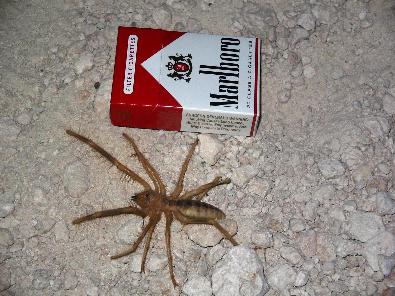
There are big spiders in SPB. They like to run around after dark, sometimes over people’s feet (yay! Come visit me!). Cut to me pointing at one on the wall and saying to Mamadou, “Wo le yatina nsoolata ñankumoo!” THAT is why I need a cat! After two unsuccessful trips to the next village over in search of kittens, we found out there were puppies to be had. All the better because as most of you know I much prefer dogs to cats and since a now have a larger-than-a-kitten sized rat trying to live in my grass roofed hut, I thought a dog might be able to scare more things away. I was a little hesitant about getting a dog at first for several reasons, the main one being that my compound doesn’t currently have any dogs and I didn’t want to burden them with a pet (a concept that doesn’t really exist in the first place in this culture) on the occasions I’m out of village for long stretches. What convinced me to get one is that Mamadou wants one as well, which means I can feel better about leaving mine in village, knowing he’ll get fed. It also means I’ll be able to train them together, show Mamdou that dogs can be smart and obedient and fun to have around. I don’t have one yet, and part of me knows it would be smarter to wait until after my in-service training. But the part of me that craves contact with other warm-blooded creatures wants a puppy now now.
Chapter 6 – 11 p.m. May 30th
Just witnessed one of the most wildly beautiful spectacles I’ve ever seen in my life – The overture to an African rainy season. Everything up to now was just the sky tuning up.
Sat in the yard after my shower watching the storm roll in from the Southeast. All I could see were red and yellow flashes in the distance as dusk shifted into twilight, lightening unlike any I know: neither a flash of the whole sky nor zigzags striking the ground. It looked more like cloud-covered fireworks or a distant view of a civil war battle. For a while I wondered if it would even hit SPB or if it would just roll on by. Mamadou and I ate dinner while the flashes got closer. Then I heard a rumbling rush of tree branches blowing from the South side of the village and Filijee yelling at me to get up “The wind has come! The wind has come!” As the wind arrived and roared through the compound I understood her urgency and shut my room up to keep it from being torn apart and covered in dust. A moment later I decided I had better move my bed inside because wind like that can only bring crazy rain. It started pouring just as I shoved my mattress through the door. I took shelter in my hut, hoping the grass thatch would be enough of a barrier against the storm. When all of my things were covered, put away, protected from leaks, I lay in my bed thinking about the great storms I’ve seen and how quiet they’ve been in comparison with this one.
When the raging center of the storm had passed I turned on my headlamp to assess how my roof fared in keeping water out of my hut (not perfectly, but everything survived). Seeing my light flashing around, Mamadou called me out into the compound. After checking the leaks in my roof we sat in the yard enjoying the cool air, the last of the light drizzle, watching the lightening ride past. Great big streaks of horizontal light branching across the sky like veins, or fissures in the surface of our world letting in light from another. Is this egg cracking? Every time a flash lit up the sky I wondered what the tiny synapses in my brain must look like as they processed such a spectacle – a lightening storm in miniature?
A comfort: rain smells more or less the same everywhere you go.
And your hut becomes fragrant with it when your roof is made of grass.
Chapter 7 – I’m a witch!
On June 15th there was a full lunar eclipse on this side of the world. I had been very excited about it because cloud cover prevented me from seeing the one that happened in North America on the winter solstice last December. I hadn’t told many people in my village about it ahead of time, since an eclipse is not the easiest thing to explain in Mandinka. As the sun set, I positioned my chair in the yard so that I could watch the moon rise, worrying that cloud cover might again thwart my eclipse viewing plans. My family was probably pretty confused about why I was so intent about watching the moon. I just kept saying, “I’m waiting for the moon. You’ll see, you’ll see, just wait.” When the moon rose above the clouds it was almost fully eclipsed. A tiny sliver was just starting to emerge from our shadow. As people in my village took note of what was happening they began singing religious songs “to make the moon come back.” It sparked some interesting conversations with people in which I explained (to French speakers) what an eclipse is, the movement of the earth and the moon, gravity, space exploration. Some favorite quotes:
Mamadou: Nafi…?
Me: Yes?
Mamdou: How did you know that was going to happen?!
Kouta: Our shadow goes all the way to the moon?!!
Bouley (my host dad): You have the moon in America?! It goes all the way over there?
Me: Did you know that people have been on the moon?
Kouta: What?!
Me: People have walked on the moon.
Kouta: And they didn’t fall off!?!
Me: No, you can’t fall off the moon.
Kouta: Is it like here (pointing to the ground)? I’ve heard the Earth is round. Is the moon round like the Earth?
Subscribe to:
Posts (Atom)