Chapter 1 – Circle of Life
My second day in Sare Pathe my namesake’s husband died. The women wailed and the men laughed about how old he was (100 according to most people in my village, although I doubt very many of them could tell me their own ages so I take this estimate with an enormous grain of salt). I went to the funeral and watched the prayers, the wailing, the men carrying the body out, wrapped in a sheet. No sooner had this procession passed than my host brother’s first wife (he has 3) grabbed me and dragged me off to the health hut. We barge in just in time to be a baby boy’s first vision of the world. It was the most intense illustration of the circle of life that I’ve ever had the honor to witness; as one person was going into the ground, another was emerging from the womb. The baby was named for the man who died. And since our namesake’s were married I get to joke about him being my baby husband!
Chapter 2 – The Mango Game
There are lots of mangoes in Kolda. Every compound in my village has at least one tree if not several, and at the rate that people eat them they really should be planting more. While its still mango season in the sense that you can still get them at the markets, the supply in SPB has been dwindling steadily since I installed almost 6 weeks ago (I may have eaten them all). But as long as there are a few precious mangoes clinging to the top branches I get to enjoy watching the Mango Game. Here’s how you play: sit around your compound after dinner, chatting and going about your usual business. When you hear the thud of a mango falling to the ground in the corner of the compound stop whatever you are doing and be one of the first to jump up, extra points if you’re already holding a flashlight. Try to find the mango before a cow, sheep, or donkey gets to it first. I thought this was a funny game when my younger host siblings played it, tripping over each other in a mad scramble to find the mango in the dark. I thought it was even funnier the first time it happened after all the kids were asleep and the person to leap out of his chair first was my 45 year-old brother-dad (brother-dad because he is technically my host brother, but behaves more like a dad to me). He came back grinning and holding out his prize, just like the kids do.
Chapter 3 – Cat Lady in Sare Pathe
I’ve been making the rounds in my village, having lunch with every compound as my first “project.” I usually leave my compound in the late morning so that I can help the women cook lunch wherever I’m going. I make a map of the compound, write down the names of the people who live there, eat, drink tea, practice Mandinka. It’s been a really great way to get to know people and to eat some good food and to win some serious brownie points. Word spread really quickly that Nafi was making the rounds and “cooking lunch”. I love how tickled people are when I do “African” things. Nafi can cook! Nafi can clean rice! Nafi drinks tea! Nafi can stir! Nafi can pound stuff! Nafi can crack peaunuts! Nafi can carry water on her head! And the best one: Nafi can speak Mandinka! Maybe the best part of this lunch project is hanging out with people who wouldn’t normally talk with me everyday. They get all my best Mandinka.
Inevitably some compounds are more fun than others. Some days this project is a chore, other days it’s the best thing for me. I had one of those days a few weeks ago when I helped Ami Diatta make lunch. It was a very small compound, which sometimes makes for a boring lunch date, but Ami kept it lively. From the first minute there we were making each other laugh, sometimes for reasons I didn’t fully understand, but its not like that doesn’t happen almost every day anyways. She was just goofy in a way that most people are not here and I thought “This lady gets it! She’s funny, she thinks I’m funny, she gets why this toubab speaking Mandinka is funny!” We giggled all through lunch at who knows what and then she made me a bracelet. I was so taken with her that I pulled out my journal and took a moment to write about her then and there, something I wouldn’t normally do. When I got back to my compound that afternoon my host family, as always, wanted a report on where I went, what I cooked, and with whom.
Mamadou: That woman you cooked with, Ami Diatta, what did you think of her?
Me: What do you mean?
Mamadou: Do you think she is maybe… a little… (taps his temple)… do you think she is a little bit not “correct”?
Perfect. Of course my new best friend in village would be the local crazy. It really made me wonder what it is about her that makes her “not correct” according to Mamadou (brother-dad). Is it just the things that endear her to me like this goofy sense of humor (in which case I’m no more “correct” than she is) or is there something more to it that I just don’t get because I don’t have the same linguistic and cultural background? In any case, she is completely harmless and functional and no more eccentric than your average American cat lady, which is why I love her.
Chapter 4 – Donkey Lady in Africa
There is a baby donkey that lives in my compound. When I’m done with my shower in the evening and am combing my hair in front of my hut he comes and finds me. He knows my voice now and comes over to have his ears scratched and his nose rubbed. I named him Boubacar, which my family thinks is hilarious. They think I’m crazy for making friends with a donkey.
Chapter 5 – Donkey Lady Needs a Cat (or a dog?)
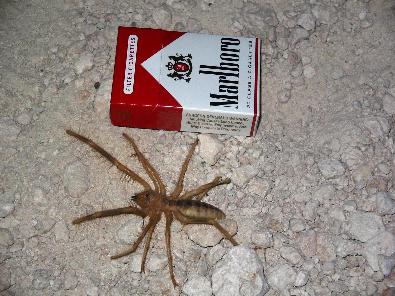
There are big spiders in SPB. They like to run around after dark, sometimes over people’s feet (yay! Come visit me!). Cut to me pointing at one on the wall and saying to Mamadou, “Wo le yatina nsoolata ñankumoo!” THAT is why I need a cat! After two unsuccessful trips to the next village over in search of kittens, we found out there were puppies to be had. All the better because as most of you know I much prefer dogs to cats and since a now have a larger-than-a-kitten sized rat trying to live in my grass roofed hut, I thought a dog might be able to scare more things away. I was a little hesitant about getting a dog at first for several reasons, the main one being that my compound doesn’t currently have any dogs and I didn’t want to burden them with a pet (a concept that doesn’t really exist in the first place in this culture) on the occasions I’m out of village for long stretches. What convinced me to get one is that Mamadou wants one as well, which means I can feel better about leaving mine in village, knowing he’ll get fed. It also means I’ll be able to train them together, show Mamdou that dogs can be smart and obedient and fun to have around. I don’t have one yet, and part of me knows it would be smarter to wait until after my in-service training. But the part of me that craves contact with other warm-blooded creatures wants a puppy now now.
Chapter 6 – 11 p.m. May 30th
Just witnessed one of the most wildly beautiful spectacles I’ve ever seen in my life – The overture to an African rainy season. Everything up to now was just the sky tuning up.
Sat in the yard after my shower watching the storm roll in from the Southeast. All I could see were red and yellow flashes in the distance as dusk shifted into twilight, lightening unlike any I know: neither a flash of the whole sky nor zigzags striking the ground. It looked more like cloud-covered fireworks or a distant view of a civil war battle. For a while I wondered if it would even hit SPB or if it would just roll on by. Mamadou and I ate dinner while the flashes got closer. Then I heard a rumbling rush of tree branches blowing from the South side of the village and Filijee yelling at me to get up “The wind has come! The wind has come!” As the wind arrived and roared through the compound I understood her urgency and shut my room up to keep it from being torn apart and covered in dust. A moment later I decided I had better move my bed inside because wind like that can only bring crazy rain. It started pouring just as I shoved my mattress through the door. I took shelter in my hut, hoping the grass thatch would be enough of a barrier against the storm. When all of my things were covered, put away, protected from leaks, I lay in my bed thinking about the great storms I’ve seen and how quiet they’ve been in comparison with this one.
When the raging center of the storm had passed I turned on my headlamp to assess how my roof fared in keeping water out of my hut (not perfectly, but everything survived). Seeing my light flashing around, Mamadou called me out into the compound. After checking the leaks in my roof we sat in the yard enjoying the cool air, the last of the light drizzle, watching the lightening ride past. Great big streaks of horizontal light branching across the sky like veins, or fissures in the surface of our world letting in light from another. Is this egg cracking? Every time a flash lit up the sky I wondered what the tiny synapses in my brain must look like as they processed such a spectacle – a lightening storm in miniature?
A comfort: rain smells more or less the same everywhere you go.
And your hut becomes fragrant with it when your roof is made of grass.
Chapter 7 – I’m a witch!
On June 15th there was a full lunar eclipse on this side of the world. I had been very excited about it because cloud cover prevented me from seeing the one that happened in North America on the winter solstice last December. I hadn’t told many people in my village about it ahead of time, since an eclipse is not the easiest thing to explain in Mandinka. As the sun set, I positioned my chair in the yard so that I could watch the moon rise, worrying that cloud cover might again thwart my eclipse viewing plans. My family was probably pretty confused about why I was so intent about watching the moon. I just kept saying, “I’m waiting for the moon. You’ll see, you’ll see, just wait.” When the moon rose above the clouds it was almost fully eclipsed. A tiny sliver was just starting to emerge from our shadow. As people in my village took note of what was happening they began singing religious songs “to make the moon come back.” It sparked some interesting conversations with people in which I explained (to French speakers) what an eclipse is, the movement of the earth and the moon, gravity, space exploration. Some favorite quotes:
Mamadou: Nafi…?
Me: Yes?
Mamdou: How did you know that was going to happen?!
Kouta: Our shadow goes all the way to the moon?!!
Bouley (my host dad): You have the moon in America?! It goes all the way over there?
Me: Did you know that people have been on the moon?
Kouta: What?!
Me: People have walked on the moon.
Kouta: And they didn’t fall off!?!
Me: No, you can’t fall off the moon.
Kouta: Is it like here (pointing to the ground)? I’ve heard the Earth is round. Is the moon round like the Earth?